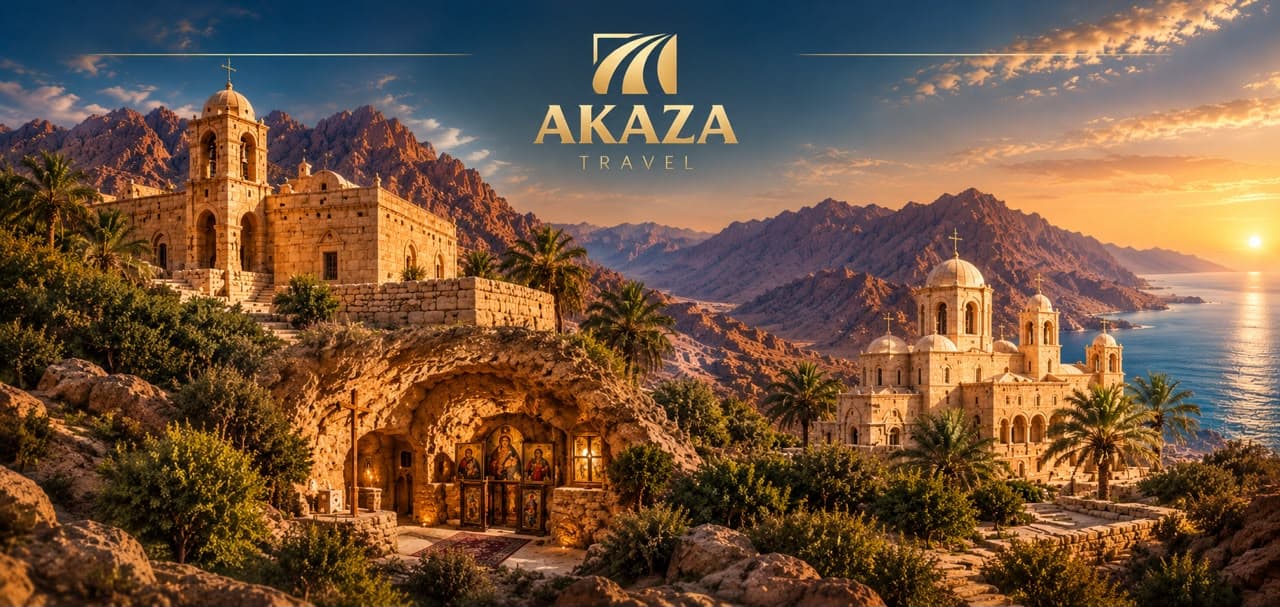
Where History Meets Serenity
Hidden within the majestic mountains of Egypt’s Eastern Desert, near the Red Sea, lie two of the country’s most remarkable treasures: the Monastery of St. Anthony and the Monastery of St. Paul. Far more than historic landmarks, these sacred sanctuaries offer an exceptional journey into the origins of Christian monasticism, where centuries of faith, art, and tradition remain beautifully alive.
Surrounded by rugged mountains and vast desert landscapes, both monasteries invite visitors to step away from the ordinary and discover a quieter, more contemplative side of Egypt—one defined by authenticity, heritage, and timeless beauty.
The Monastery of St. Anthony: The Cradle of Monasticism
Founded in the fourth century around the spiritual legacy of St. Anthony the Great, the Monastery of St. Anthony is widely regarded as the oldest Christian monastery in the world. St. Anthony, who lived from approximately 251 to 356 AD, withdrew into the Eastern Desert in pursuit of a life devoted to prayer and solitude. His teachings and example inspired generations of monks and helped shape the foundations of Christian monastic life.
Today, the monastery stands as a remarkable testament to nearly seventeen centuries of uninterrupted spiritual heritage. Behind its imposing historic walls, visitors discover ancient churches, peaceful courtyards, traditional monastic architecture, and precious religious artwork that reflects the artistic traditions of Coptic Christianity.
One of its most extraordinary highlights is the cave where St. Anthony is believed to have lived in seclusion. Reaching this sacred place offers a unique opportunity to connect with the origins of monastic life and appreciate the extraordinary devotion that transformed the surrounding wilderness into a centre of spiritual significance.
The monastery’s ancient wall paintings and icons add another layer of fascination, preserving artistic traditions that have endured through generations. Every detail reveals a story of faith, resilience, and cultural continuity.
The Monastery of St. Paul: A Sanctuary of Solitude
Equally captivating is the Monastery of St. Paul the Anchorite, another exceptional monument to Egypt’s early Christian heritage. Established around the fourth century, the monastery is associated with St. Paul, who, according to Christian tradition, spent many decades living in a secluded cave in the desert.
Built around this sacred cave, the monastery preserves an atmosphere of remarkable tranquillity. Its historic churches, traditional architecture, and secluded setting create an experience that feels both intimate and deeply connected to the past.
The cave associated with St. Paul remains one of the monastery’s most significant features, offering visitors a glimpse into the austere lifestyle of the early desert hermits. The surrounding complex also reveals the practical ingenuity of monastic communities, whose lives were shaped by prayer, simplicity, and self-sufficiency.
What makes St. Paul’s Monastery particularly special is its sense of seclusion. Far from the pace of modern life, it offers a rare opportunity to appreciate the stillness of the desert and the extraordinary spiritual traditions that flourished within it.
Why These Monasteries Deserve a Place on Your Journey
Visiting the monasteries of St. Anthony and St. Paul is an experience that goes beyond conventional sightseeing. It is an invitation to discover a different dimension of Egypt—one where history is not confined to museums, but remains woven into the living traditions of its people.
A heritage spanning centuries: Explore two of the most important landmarks in the history of Christian monasticism and discover their enduring influence on spiritual life around the world.
Exceptional Coptic art and architecture: Admire historic churches, ancient icons, traditional frescoes, and architectural details that preserve the distinctive character of Egypt’s Christian heritage.
The beauty of the Eastern Desert: Experience the striking contrast between the monasteries’ historic stone walls and the dramatic mountain scenery that surrounds them.
A deeper cultural connection: Gain insight into the lives of the early Christian hermits and the traditions that continue to shape Egypt’s Coptic Orthodox community today.
A moment of tranquillity: Beyond their historical importance, these sacred places offer an atmosphere of peace and reflection that makes the visit genuinely memorable.
An Unforgettable Chapter of Egypt
The monasteries of St. Anthony and St. Paul stand among Egypt’s most extraordinary historical and spiritual destinations. Their significance lies not only in their remarkable age, but also in the living heritage they preserve and the stories they continue to tell.
For travellers seeking authentic cultural experiences, meaningful encounters with history, and destinations beyond the familiar, these ancient sanctuaries offer something truly distinctive.
Discover the timeless legacy of Egypt’s Eastern Desert, walk through centuries of living history, and experience two remarkable places where faith, heritage, and serenity come together in an unforgettable journey.