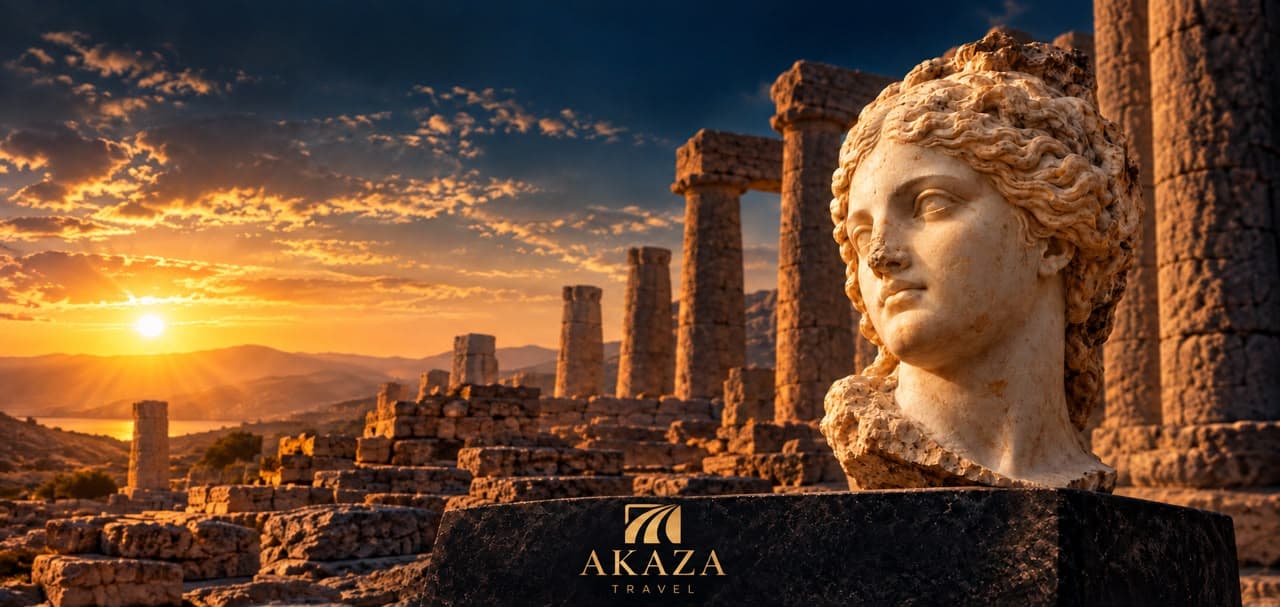
A marble head of Aphrodite, discovered at Herakleopolis Magna in Beni Suef, offers one such moment. Announced in May 2026, the find brings the elegance of classical sculpture into the story of an Egyptian city shaped by centuries of political, religious, and artistic change.
For travelers drawn to meaningful cultural experiences, it is an invitation to look beyond the expected and discover an Egypt with even more to reveal.
An Ancient City Returns to the Spotlight
Known today as Ihnasya Al-Madina, Herakleopolis Magna occupies an important place in Egypt’s archaeological heritage. An Egyptian mission from the Supreme Council of Antiquities uncovered the Aphrodite head alongside architectural remains, inscriptions, and objects associated with different periods of the city’s history.
The appeal lies in that extraordinary variety. Rather than offering a glimpse of a single moment, the excavation reveals a place that developed across generations, preserving traces of changing beliefs, artistic tastes, and civic life.
Together, these discoveries invite a richer understanding of Egypt: a civilization with its own powerful traditions and lasting connections across the Mediterranean.
The Quiet Elegance of Aphrodite
The marble head represents Aphrodite, the Greek goddess of love and beauty. Its carefully carved facial features and detailed curls reflect the classical sculptural traditions associated with the Greek and Roman worlds.
Measuring approximately 24 by 25 centimeters, the surviving head demonstrates how much presence an ancient sculpture can retain, even as a fragment. Its appeal comes from the attention given to expression, proportion, and texture.
There is something especially compelling about encountering beauty on this scale. A monumental temple impresses through its size; a sculpted face encourages a closer look.
For today’s observer, the piece creates an intimate connection with ancient craftsmanship. Someone selected the material, shaped its contours, and worked its surface with care. Centuries later, those decisions still hold our attention.
Architecture That Tells a Longer Story
The excavation also revealed extensions of a Roman basilica and remains of an earlier Doric temple. According to preliminary studies reported by archaeological officials, elements from the temple were reused in the sixth century as part of the basilica’s construction.
This detail offers a fascinating way to imagine the site. Buildings could carry pieces of earlier monuments into new settings, giving familiar stone a different purpose.
For visitors interested in architecture, that process adds depth to the experience of ancient ruins. A column, foundation, or paving block may belong to a story that began before the structure surrounding it.
At Herakleopolis Magna, the relationship between these remains helps researchers explore how the city’s built environment changed over time.
Royal Inscriptions and Everyday Objects
Among the discoveries was a reused stone block bearing the names of Senusret III, a ruler of Egypt’s Middle Kingdom. Officials highlighted its importance in understanding the city’s royal associations and religious standing.
Other finds included statue fragments and terracotta molds associated with coin production during the Roman period.
These objects broaden the narrative beyond temples and royal names. They encourage questions about work, exchange, decoration, and the practical activities that supported urban life.
Seen together, the finds suggest a city whose importance extended across different spheres. Religious devotion, political authority, artistic expression, and economic activity all left material traces for archaeologists to investigate.
That combination gives the discovery its particular richness: beauty becomes part of a larger human story.
A Fresh Perspective on Cultural Travel
Discoveries like this can change the way you approach an Egyptian vacation. They encourage you to see familiar destinations with renewed curiosity and to ask what lies behind the celebrated images.
At Giza, the scale of the pyramids may be your first impression. In a museum, a smaller object might become the detail you remember most. In Luxor or Aswan, an explanation from a knowledgeable guide can turn an unfamiliar scene into something personal and memorable.
The most rewarding cultural journeys allow space for both experiences: the extraordinary landmark and the quiet detail.
Following archaeological news adds another dimension. It connects the history you encounter during your trip with research that continues today.
Explore Egypt at Your Own Pace
At AKAZA Travel, we believe a cultural journey should feel as thoughtfully considered as the places it introduces you to.
Our private tours pair licensed Egyptologist guides with an itinerary shaped around your interests. Whether you are fascinated by ancient art, royal history, temple architecture, or the stories behind museum collections, your curiosity helps guide the experience.
With no group buses and no compulsory shopping stops, you can focus on what brought you to Egypt.
Perhaps you want a cultural excursion during a Red Sea vacation. Perhaps Cairo is the starting point for a deeper exploration. From Hurghada, Sharm El Sheikh, Marsa Alam, or Cairo, our team can help design a journey that fits your plans, with arrangements tailored to your departure point and chosen destinations.
Luxury, in this setting, means having the time, attention, and guidance to appreciate where you are.
An Ancient Story Still Unfolding
Archaeological teams continue studying and conserving the discoveries from Ihnasya, working to establish a fuller understanding of their dates and historical context.
The Aphrodite head is a beautiful highlight, but its significance grows through its relationship with the inscriptions, architecture, and other objects found nearby.
For travelers, that ongoing work offers a compelling reminder: Egypt’s heritage is something we continue to learn about.
Let that curiosity shape your next journey. Discover celebrated monuments, notice the finer details, and experience the country with a guide who helps connect them.
It is an opportunity to return home with more than photographs: a deeper appreciation of the artistry, ambition, and everyday lives that shaped this remarkable country.
Explore Egypt with AKAZA Travel, and make room for the stories that stay with you.