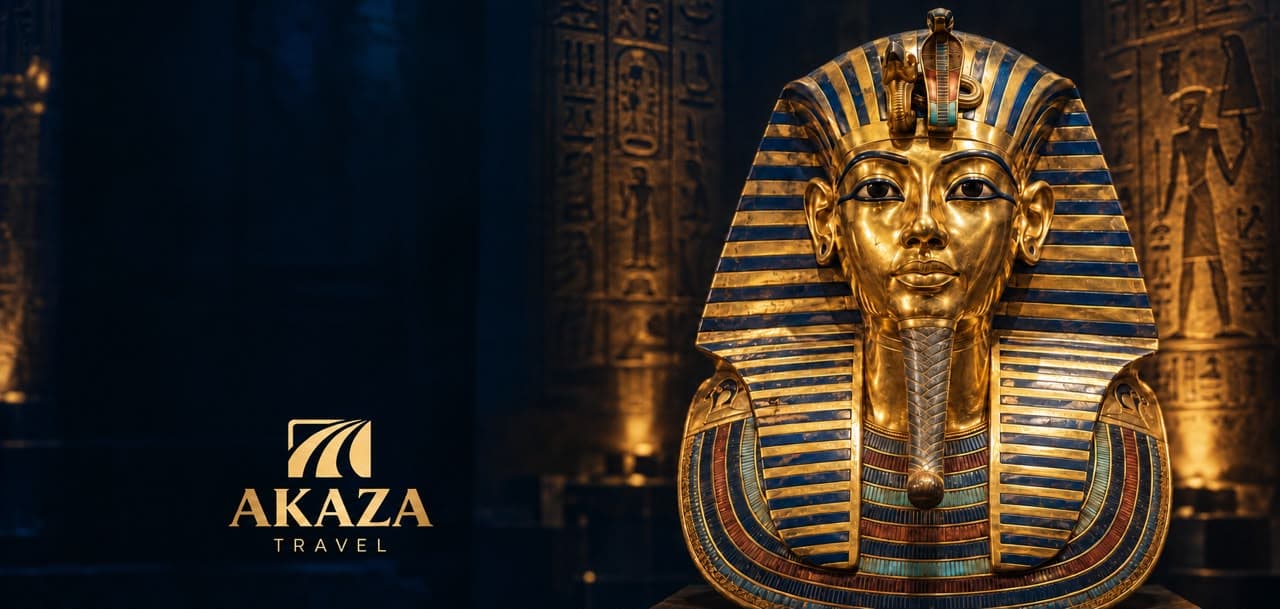
With its beautifully crafted features, shimmering gold and intricate blue details, this extraordinary artefact represents the artistic excellence and spiritual beliefs of ancient Egypt. For travellers exploring Egypt’s rich history, seeing the mask in person offers a remarkable connection to a civilisation that flourished more than 3,000 years ago.
Who Was Tutankhamun?
Tutankhamun was a pharaoh of Egypt’s 18th Dynasty who ascended the throne as a young boy during the 14th century BC. Although his reign was relatively short, he became one of the most famous rulers of ancient Egypt because of the extraordinary discovery of his nearly intact tomb.
In November 1922, British archaeologist Howard Carter and his team uncovered the entrance to the young king’s tomb in the Valley of the Kings near Luxor. The discovery revealed thousands of objects, including jewellery, ceremonial items, furniture and funerary treasures that offered an exceptional glimpse into royal life and ancient Egyptian burial customs.
Among these remarkable discoveries, Tutankhamun’s golden mask became an internationally recognised symbol of Egypt’s ancient heritage.
The Craftsmanship Behind Tutankhamun’s Golden Mask
The mask is a masterpiece of ancient Egyptian metalworking. Measuring approximately 54 centimetres in height, it was crafted from gold and decorated with carefully selected materials, including lapis lazuli, glass, obsidian and other colourful inlays.
Its calm facial expression, almond-shaped eyes and finely defined features portray the king with an idealised, almost divine appearance. The blue-and-gold striped nemes headdress frames his face, while the cobra and vulture emblems on his forehead represent royal authority and protection.
Every detail reflects remarkable technical skill. The contrast between the luminous gold and deep blue inlays creates a distinctive appearance that remains instantly recognisable today.
The mask was not simply designed to honour a king’s appearance. It served an important religious purpose within ancient Egyptian funerary traditions, making it one of the most significant objects discovered in Tutankhamun’s tomb.
What Does the Golden Mask Symbolise?
To understand the mask fully, it is important to consider the ancient Egyptians’ beliefs about death and the afterlife.
They believed that protecting the deceased’s body and spirit was essential for the journey into the next world. The golden mask was placed over Tutankhamun’s mummified head and shoulders, helping to safeguard the king and identify him with divine powers.
Gold held special significance in ancient Egyptian religion because it was associated with the gods and their eternal nature. The mask’s material therefore carried a meaning far beyond its beauty.
The royal headdress and protective symbols reinforced Tutankhamun’s status as a pharaoh, while the mask’s inscriptions invoked divine protection. Its connection with Osiris, the god associated with the afterlife and resurrection, further reflects the spiritual beliefs surrounding royal burial.
Together, these elements transformed the mask into a powerful expression of kingship, protection and the ancient Egyptian hope for eternal life.
Why Is Tutankhamun’s Mask So Famous?
The mask owes its worldwide reputation to both its extraordinary craftsmanship and the circumstances of its discovery. Unlike many royal tombs that had suffered extensive looting over the centuries, Tutankhamun’s burial chamber preserved an astonishing collection of objects.
The discovery attracted international attention and helped inspire generations of archaeologists, historians and travellers to explore ancient Egypt.
Today, the mask represents far more than the legacy of one young pharaoh. It has become a cultural emblem associated with the pyramids, temples, hieroglyphs and monumental achievements of Egyptian civilisation.
Its enduring appeal lies in the way it combines artistic beauty with historical mystery. Each detail invites visitors to look beyond the gold and discover the beliefs and traditions of the people who created it.
Where Can You See Tutankhamun’s Golden Mask Today?
Visitors can see Tutankhamun’s famous golden mask at the Grand Egyptian Museum in Giza, where it forms part of the collection dedicated to the young pharaoh and his extraordinary treasures.
The museum offers an opportunity to explore ancient Egyptian history through an impressive range of archaeological objects. Seeing the mask alongside other artefacts from Tutankhamun’s burial collection helps visitors appreciate the scale of the discovery and the craftsmanship involved in preparing a royal burial.
For anyone interested in Egypt’s past, the experience is a highlight of a cultural visit to Cairo and Giza. It can also be combined with visits to the Giza Pyramids and other historic attractions, creating a memorable journey through the country’s ancient heritage.
Travellers should check the museum’s current visiting information before their trip to ensure they have enough time to explore the collections.
Plan Your Egyptian Cultural Journey with AKAZA TRAVEL
Discovering Tutankhamun’s golden mask is an unforgettable experience for anyone fascinated by ancient history. With AKAZA TRAVEL, you can plan a cultural journey that brings Egypt’s extraordinary past closer to you.
Whether you are interested in exploring Cairo’s museums, admiring the Pyramids of Giza or travelling to Luxor to discover the Valley of the Kings and the temples of ancient Thebes, a well-planned itinerary can help you make the most of your stay.
Let AKAZA TRAVEL help you organise your Egyptian adventure and discover the stories, monuments and timeless treasures that make Egypt one of the world’s most fascinating travel destinations.